Religion As History-religion As Myth
Snellgrove David L.

|
|
Editeur - Casa editrice |
Orchid Press
|
Religione
Buddhismo
Vajrayana
|
|
Anno - Date de Parution |
2006
|
|
Pagine - Pages
|
156
|
|
Titolo originale
|
Religion As History-religion As Myth
|
|
Lingua - language - langue
|
eng
|
|
|
|
acquista in Italia tramite IBS
|
|
|
|
|
|
|

|
Amazon.com (United States) - order this book
Religion As History - Religion As Myth |
|
|
|
|
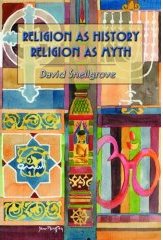 Religion As History-religion As Myth
An eminent scholar’s critical examination and comparison of the teachings of some of the world’s major religions, primarily Christianity and Buddhism, and to a lesser extent Islam and Judaism.
|
|
|
Recensione in altra lingua (English): |
|
To practising bonpos, Bon simply means the true religion of Tibet, while to Tibetan Buddhists, Bon refers to the false teachings and practices that were prevalent before Buddhism finally succeeded in gaining a firm hold on the country.
The present study resulted from a period during which the author, a renowned scholar of Asian languages and cultures, was engaged in intense contact with practicing bonpos. It consists of the translation of fundamental texts of Bon, based on a manuscript of some 400 years of age, in which the entire Bon tantric practice is summarized.
In many ways remarkably parallel to the early Buddhist teachings, much of the Bon tradition was subsequently incorporated back into Buddhism when that religion was formally adopted into Tibetan culture. This important study, first published in the 1960s and long out of print, will be welcomed by all with interest in the religions of the Himalayas. |
|
|
|
Biografia |
|
Traccia di una intervista del 2004
Born in 1920 in Portsmouth as father a naval officer; moved to Hampshire countryside; parents; brother also in the Navy but died during the war; got scholarship to Christ’s Hospital, Horsham; went to Southampton University to study French and German; war came and entered the army; went to India; got there by boat via Cape Town; officers and other ranks
Landed in Bombay in 1943; in charge of a reconnaissance group; sent to Barrakpore, Calcutta; working in intelligence; during leave went to Sikkim; at that time nobody went there; did tour on two occasions.
Became interested in Tibetan religion; met the Maharaja of Sikkim and family; at that time simple Himalayan country but more advanced than Dolpo; attached to an American unit by the end of the war.
Had been in touch with Sir Basil Gould who was in charge of the mission in Gangtok; applied to join Indian Civil Service to get into the political service to get into Tibet; back in England took examinations at India Office and accepted; lasted three months due to Indian Independence.
With knowledge of India and Tibetan decided to continue academically; met Sir Harold Bailey in Cambridge; went to Queen’s to study Sanskrit and Tibetan; Bailey was tutor, he only had three students; had already past the Government of India examination in Tibetan; had learnt both to speak and write Tibetan with the help of a Lama who had been at Calcutta University; also had a Tibetan servant whom I found in Kalimpong; was my batman and accompanied me through all tours.
Memories of Sir Harold Bailey; graduated and offered a post in London in Tibetan at School of Oriental and African Studies; post originally at Readership level but eventually got personal Professorship; started in 1950, before which went to Rome to study with Guiseppe Tucci for a year.
First went to Nepal in 1953-4; large part of Northern Nepal Tibetan in religion and culture; Tucci had been to Mustang and had travelled extensively in Western Tibet; Pasang personal assistant; first went to Solo Khumbu; in Nepal when Everest first climbed; in 1953 walked into Nepal over the hills; then Nepal an enclosed Himalayan Kingdom; large stocks of Sanskrit manuscripts in libraries, nothing comparable in India as all destroyed; had to get permission to travel within Nepal.
Name of Dolpo unknown at that time, but wanted to explore in the Tibetan frontier area; Ekai Kawaguchi had been through it earlier and written about it but he thought Dolpo was name of one town, not the area; went there in 1956 with Pasang and back in 1960-1; Pasang had no problem in communicating with Dolpo people; never learnt Nepali properly but relied on Pasang; he could manage with any Tibetan dialect; had originally met him in Kalimpong where he was the disciple of a Mongolian Lama; had had trouble with my Christian servant and wanted to find a Tibetan as I had during the war; Pasang, a Sherpa, was recommended
To get to Dolpo walked all the way up the Gandaki valley; lack of maps; longest tour took 8 months in 1956; fortunate to be able to spend long periods on research leave
At S.O.A.S. could teach as I liked; never had to give general courses; did series of general lectures on Tibet with the British Museum. |
|
Consulta anche:
Intervista in MPG4
|
|
Consulta anche:
Intervista
|
|


 Titres
Français
Titres
Français